
Ramp Safety Guide and Checklist
Amramp ramps are designed for safe, everyday use when installed and used properly. This guide provides safety recommendations for wheelchair users, caregivers, and pedestrians, including ramp use, weather considerations, maintenance, and when to contact Amramp for help.
Safety begins with using the ramp as intended, keeping the ramp clear, and addressing issues early. If you ever have questions about safe use, notice shifting, or need modifications, contact Amramp before making changes.
Need help, service, or approved winter de-icer? Visit our Contact page or call 800-649-5215.
Before Using the Ramp
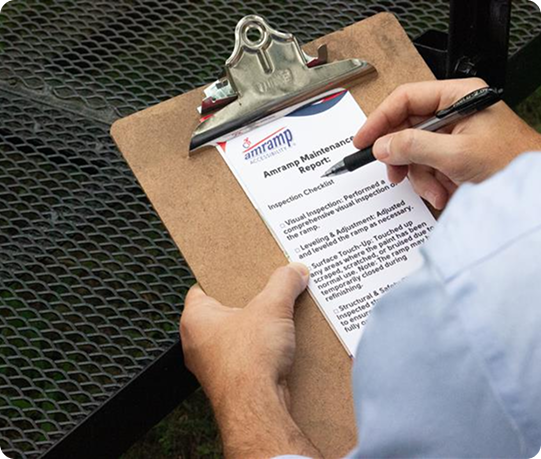
Use these quick checks before you use the ramp, especially during periods of heavy use, bad weather, or changing conditions.
- Check the ramp surface for debris, wet leaves, snow, ice, or obstructions.
- Confirm the ramp is clear from end to end, including landings and transitions.
- Check for adequate lighting if using the ramp after dark.
- If anything feels unstable, uneven, or misaligned, do not use the ramp and contact Amramp.
Manual Wheelchairs
Manual wheelchair use often requires caregiver assistance on ramps. Always confirm the user and caregiver can safely use the ramp as installed before routine use.
- Confirm both the user and caregiver can use the ramp as installed.
- Caregivers should always push the user up the ramp.
- Caregivers should back the user down the ramp.
- Use lap belts where available.
Additional reminders:
- Move slowly and maintain control at all times.
- If the caregiver feels they cannot safely control the chair, stop and contact Amramp to discuss options or adjustments.

Power Wheelchairs and Scooters
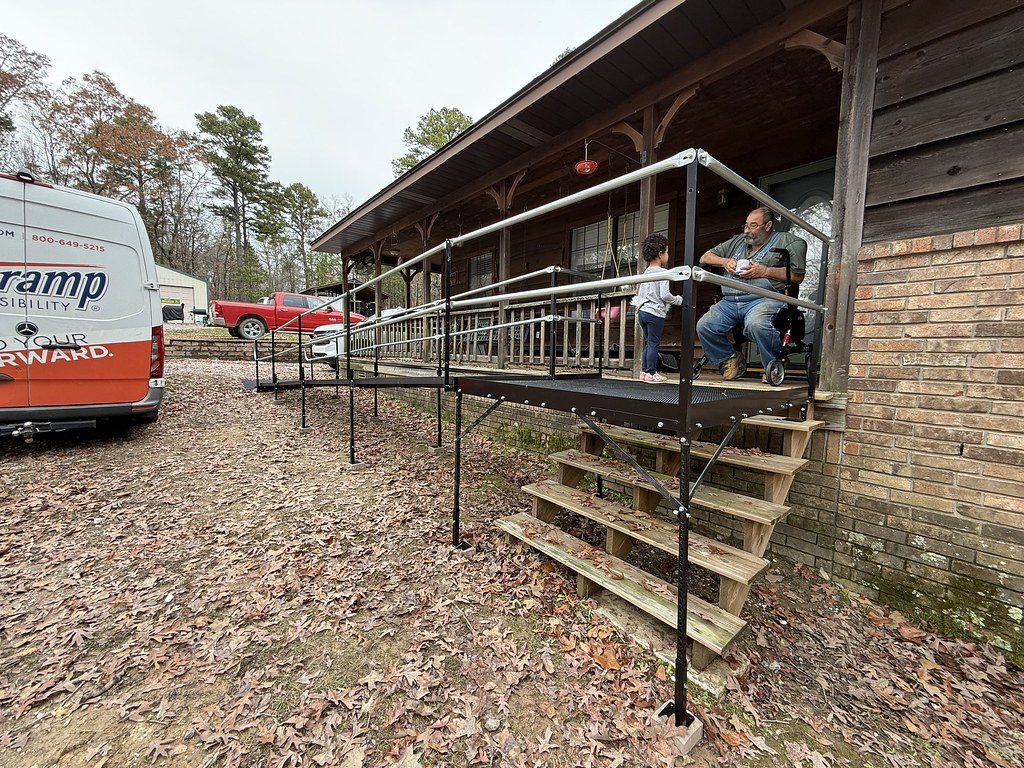
Power mobility devices can gain speed quickly on ramps. Speed and control are especially important on slopes and during wet or cold conditions.
- Always use the lowest speed setting possible.
Additional reminders:
- Move slowly and avoid sudden turns.
- If the surface is wet, icy, or covered in frost, do not use the ramp until it is cleared and safe.
Weather Safety: Rain, Ice, Frost, and Snow
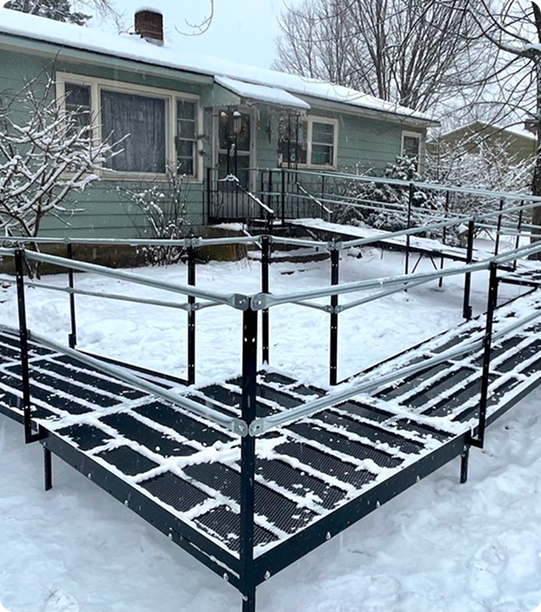
Rain, ice, frost, and snow may cause slippery conditions due to the slope of the ramp. Even when the ramp surface appears clear, refreezing moisture can create slick areas.
- Use added caution in rain, ice, frost, and snow.
- Do not use salt de-icer, snowblowers, or metal shovels on the ramp.
- To remove snow and ice, use a broom or plastic shovel only.
- Use only approved liquid de-icer available locally from Amramp.
Additional reminders:
- Clear snow as early as possible to reduce packed snow and refreezing.
- Watch for shaded areas where ice may linger longer.
- If conditions cannot be cleared safely, avoid ramp use until it is safe.
General Use Safety
Use the ramp as intended and avoid behaviors that increase the chance of tipping or loss of control.
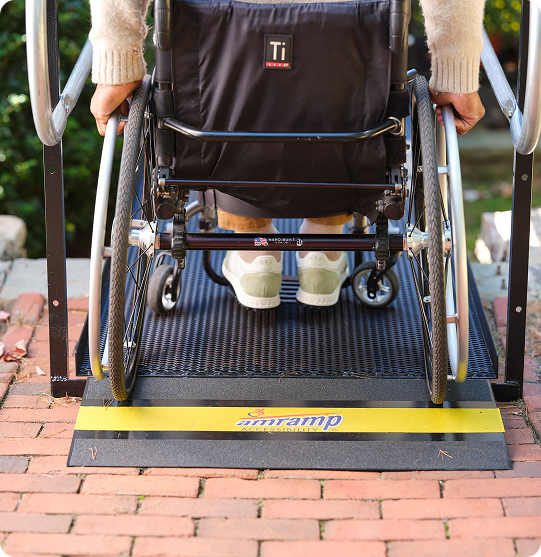
- Never reverse up or down the ramp.
- To change directions, proceed to the end of the ramp, turn around on a level surface, and then proceed forward up or down the ramp.
Additional reminders:
- Use handrails if available.
- Avoid stopping on the slope unless necessary.
- If you need to pause, do so on a level landing whenever possible.
Keep the Ramp Clear and Safe for Household Use
A clean, obstruction-free ramp helps prevent trips, snags, and unexpected stops.
- Do not allow children to play on the ramp.
- Keep the ramp clean and free of leaves, branches, debris, or other obstructions.
- Do not place electrical cords on the ramp.
- Keep the ramp area lit to ensure full visibility after dark.
Additional reminders:
- Inspect the ramp after storms or high winds.
- Avoid placing mats, rugs, or loose coverings on the ramp unless approved for safe ramp use.


Weight Limits and Intended Use
Ramps are engineered for specific weight capacity and intended use. Exceeding limits can stress the ramp system and reduce safety.
- Ramp is for wheelchair or pedestrian use only.
- Do not use ramp for loading materials of any kind.
- Do not exceed 850 lbs combined weight of user, wheelchair, and caregiver.
- Call Amramp if there are weight changes. Proper use of the ramp may require modifications.
Additional reminders:
- If mobility equipment changes, contact Amramp to confirm the ramp is still appropriate.
- If more than one caregiver is typically assisting, confirm combined weight remains within limits.
Ramp Damage, Shifting, and Modifications
Damage or shifting can cause unsafe transitions and misalignment, even if the ramp looks mostly intact.
- Always contact Amramp before making any modifications to the ramp system.
- Mesh surface may not be suitable for pets.
- Do not use the ramp if it has been hit by a car, snow plow, or damaged in any way, which can cause misalignment. Call Amramp for repair.
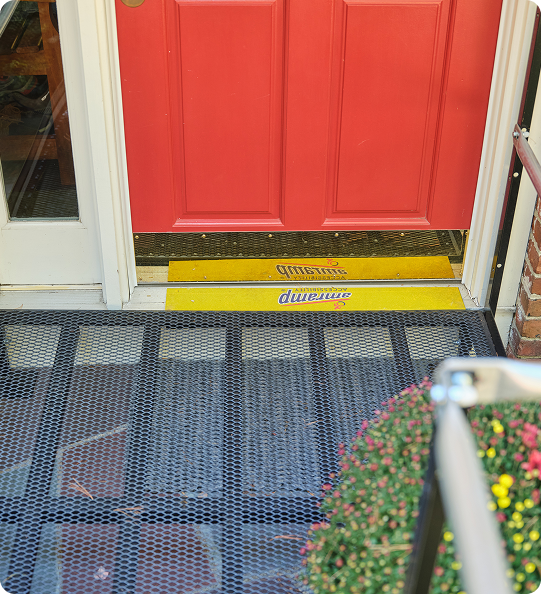
- Periodically check the connection of the ramp to the property. Contact Amramp if adjustment is required.
Routine Checks and Maintenance
Most ramp concerns can be prevented by periodic checks and simple maintenance practices. Recommended routine checks:
- Confirm the ramp surface is clear and clean.
- Check that transitions and landings remain stable and aligned.
- Visually inspect connections to the property and call Amramp if anything appears loose or shifted.
- Check lighting around the ramp and replace bulbs as needed.
Maintenance of ramp finish:
- Normal use may cause scratches to the painted finish.
- Annual or twice annual touch up is recommended using an exterior, Rust-Oleum grade enamel spray.
- Alternatively, contact Amramp to arrange for service from your local owner.
Anchoring Standard
Per installation standards, the ramp is anchored at the top transition for optimal safety.
If anchoring is refused, the customer accepts the risk of the ramp potentially shifting away from the property.
When to Contact Amramp
Contact Amramp for inspection, service, or modifications if:
- The ramp has been hit by a car or snow plow.
- The ramp appears shifted, loose, uneven, or misaligned.
- Weight or equipment needs have changed.
- The ramp surface or transitions feel unsafe.
- The ramp needs adjustments, extensions, or reconfiguration.
- You need approved winter de-icer or seasonal service recommendations.
Visit our Contact page or call 800-649-5215.