
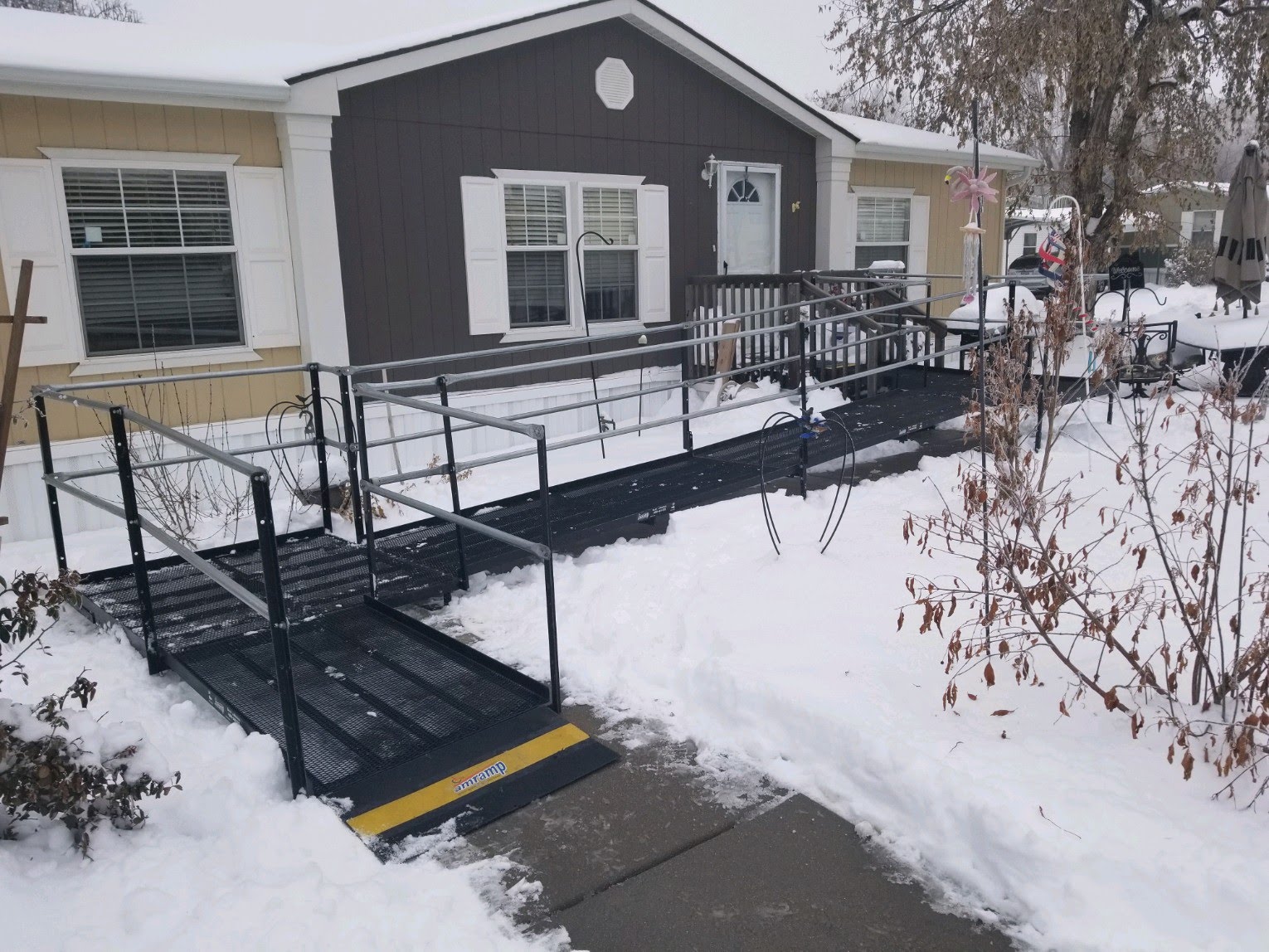
Why Winter Ramp Safety Requires Extra Attention
Amramp ramps feature a mesh surface designed to allow rain and snow to pass through, which helps reduce pooling and surface buildup. However, winter weather can still create slippery conditions on any ramp. Ice, frost, and packed snow can affect traction quickly, especially on a slope. This guide outlines winter ramp safety best practices based on Amramp’s ramp safety checklist.
Falls are also a major seasonal safety concern. In 2021, emergency departments recorded nearly 3 million visits for older adult falls, and falls among adults 65 and older caused over 38,000 deaths.
If you need help with winter maintenance products, safety questions, or ramp adjustments, contact your local Amramp team through our Contact page or call 800-649-5215.
Ramps provide safe access when used properly, but winter weather introduces conditions that can quickly change the surface of the ramp. Even a small amount of ice or frost can cause wheels or footwear to slip, especially on a slope.
Truveta Research found that during winter months there are 13.1 emergency department visits for falls on snow or ice per 10,000 emergency department visits, and rates are three times higher in states with freezing winter temperatures than in milder states.
Common winter ramp hazards include:
- Ice buildup and refreezing
- Packed snow that becomes slick
- Frost that is difficult to see
- Reduced visibility due to shorter daylight hours
- Damage caused by metal shovels, snowblowers, or salt de-icer
How You Can Stay Safe On Your Wheelchair Ramp in Ice, Rain, and Snow
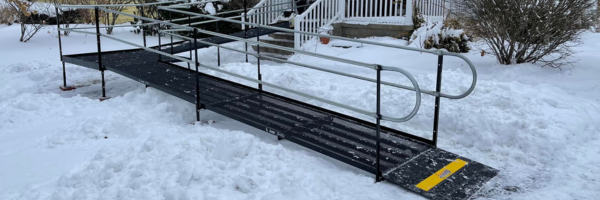
1) Use Added Caution in Rain, Ice, Frost, and Snow
Rain, ice, frost, and snow may cause slippery conditions due to the slope of the ramp. Before using the ramp, check for slick spots, snow accumulation, and any areas where ice may have formed.
Recommended practices:
- Move slowly and deliberately
- Avoid quick turns on a slope
- Use handrails if available
- If conditions are unsafe, address the surface before use
For more information about ramp options and installation, visit Wheelchair Ramps.
2) Remove Snow and Ice Using the Correct Tools
Snow and ice removal should be done carefully to protect both the ramp surface and the ramp finish. Certain tools and products can damage the ramp and lead to long-term safety issues.
Amramp recommends:
- Use a broom or plastic shovel only
- Do not use salt de-icer
- Do not use snowblowers
- Do not use metal shovels on the ramp
- Use only approved liquid de-icer (available locally from Amramp)
If you are a current customer and need approved de-icer, use the Contact page to reach your local Amramp owner and request the correct product.
3) Power Wheelchairs and Scooters: Use the Lowest Speed Setting
Power chairs and scooters can gain speed quickly when traveling on a slope. In winter conditions, slower speed reduces the chance of sliding and improves control.
Safety guidance:
- Always use the lowest speed setting possible when using the ramp
This is recommended even when the ramp appears clear, since moisture can freeze and create slippery conditions without being immediately visible.
4) Manual Wheelchairs: Follow Safe Caregiver Technique
Manual wheelchair users often depend on caregiver assistance when using a ramp. This is especially important in winter conditions, when traction may be reduced.
From the checklist:
- Confirm both the user and caregiver can use the ramp as installed
- Caregivers should always push the user up the ramp
- Caregivers should back the user down the ramp
- Use lap belts where available
Backing down the ramp helps prevent uncontrolled movement and allows better positioning and control for the caregiver.
5) Do Not Reverse Up or Down the Ramp
Reversing on a ramp increases risk, particularly when the surface is wet or icy. If the user needs to change directions, the safest option is to do so on a level surface.
Best practice:
- Never reverse up or down the ramp
- To change directions, proceed to the end of the ramp, turn around on a level surface, then proceed forward up or down the ramp
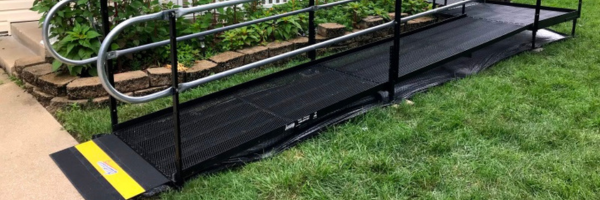
6) Keep the Ramp Clear of Leaves, Debris, and Other Obstructions
Snow can cover hazards that would otherwise be visible. Debris can cause wheels to catch or can create uneven patches that become slippery when wet or frozen.
General ramp safety includes:
- Keep the ramp clean and free of leaves, branches, debris, and obstructions
- Do not place electrical cords on the ramp
- Do not allow children to play on the ramp
If you are exploring other accessibility solutions beyond ramps, Amramp also offers Stair Lifts and Vertical Platform Lifts.
7) Ensure the Ramp Area is Well Lit
Winter brings shorter daylight hours and darker conditions earlier in the evening. Proper lighting is important for identifying ice, snow buildup, or obstacles.
Safety guidance:
- Keep the ramp area lit to ensure full visibility after dark
Lighting helps users and caregivers identify slippery areas before entering the ramp.
8) Do Not Use a Ramp That Has Been Damaged
Winter conditions increase the likelihood of accidental impacts from vehicles or snow plows. Impact damage can cause misalignment, shifting, or unsafe gaps.
From the checklist:
- Do not use the ramp if it has been hit by a car, snow plow, or damaged in any way
- Call Amramp for repair
- Periodically check the connection of the ramp to the property
- Contact Amramp if adjustment is required
If any part of the ramp system looks bent, loose, shifted, or uneven, the safest action is to stop using it and contact Amramp. For service, Contact Amramp or call 800-649-5215.
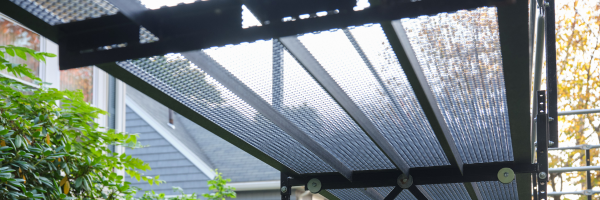
9) Maintain Ramp Finish to Protect Long-Term Performance
Normal use and weather exposure can cause scratches to the ramp finish. Touching up the finish helps reduce corrosion and extends the life of the system.
Maintenance recommendations:
- Annual or twice annual touch up is recommended using an exterior, Rust-Oleum grade enamel spray
- Alternatively, contact Amramp to arrange for service from your local owner
Winter Ramp Safety Checklist
- Check the ramp surface before use
- Use caution in rain, ice, frost, and snow
- Remove snow and ice using a broom or plastic shovel
- Use approved liquid de-icer only
- Power chairs and scooters should use the lowest speed setting
- Manual chair users should follow proper caregiver guidance
- Never reverse up or down the ramp
- Keep the ramp clean and free of debris and obstructions
- Keep the ramp area well-lit after dark
- Do not use the ramp if it has been damaged
Contact Amramp if the ramp connection needs adjustment