Commercial buildings can use several accessibility solutions to help people navigate entrances, stairs, and changes in elevation. Common options include commercial wheelchair ramps, vertical platform lifts (VPLs), and stairlifts. The right solution depends on factors such as the building’s available space, vertical rise, who will use the equipment, and whether access is needed temporarily or long term.
From offices and schools to healthcare facilities, houses of worship, retail locations, multifamily properties, and municipal buildings, every property presents different accessibility challenges. Understanding how these solutions differ can help property owners, facility managers, contractors, and other decision-makers find an option that works for their building.
Commercial Ramps for Buildings
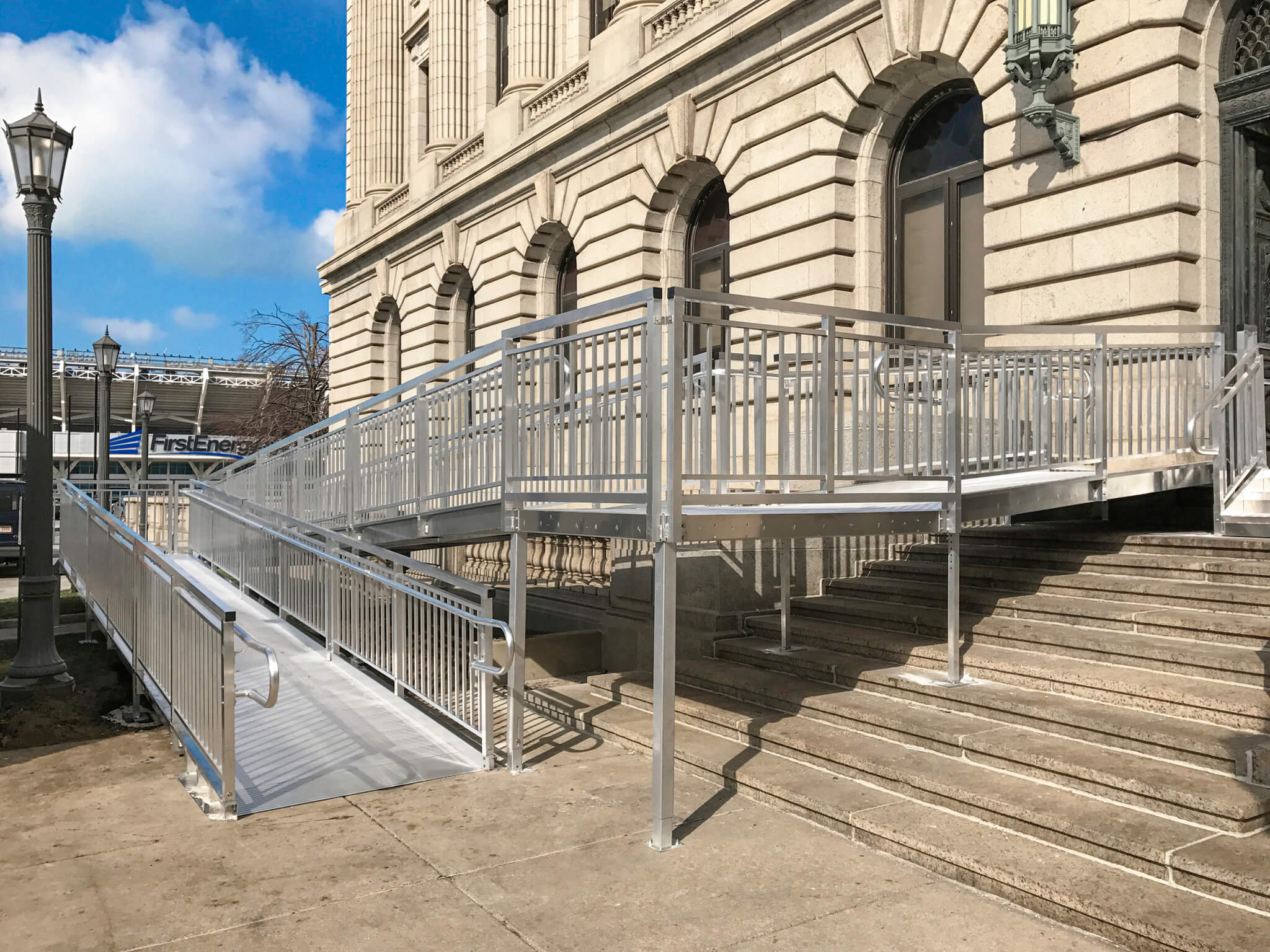
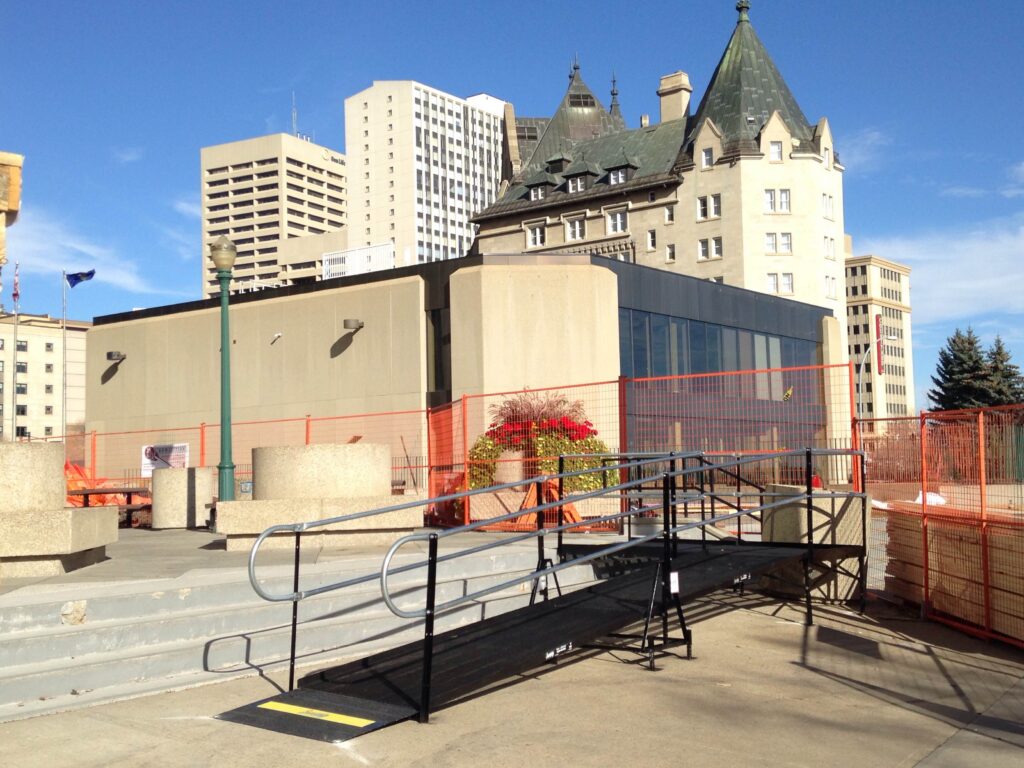
Commercial ramps provide an accessible route over stairs, curbs, raised entrances, and other changes in elevation. When a property has sufficient space for a ramp system, a commercial wheelchair ramp can provide a practical way for people using wheelchairs, scooters, walkers, and other mobility devices to enter and navigate a building.
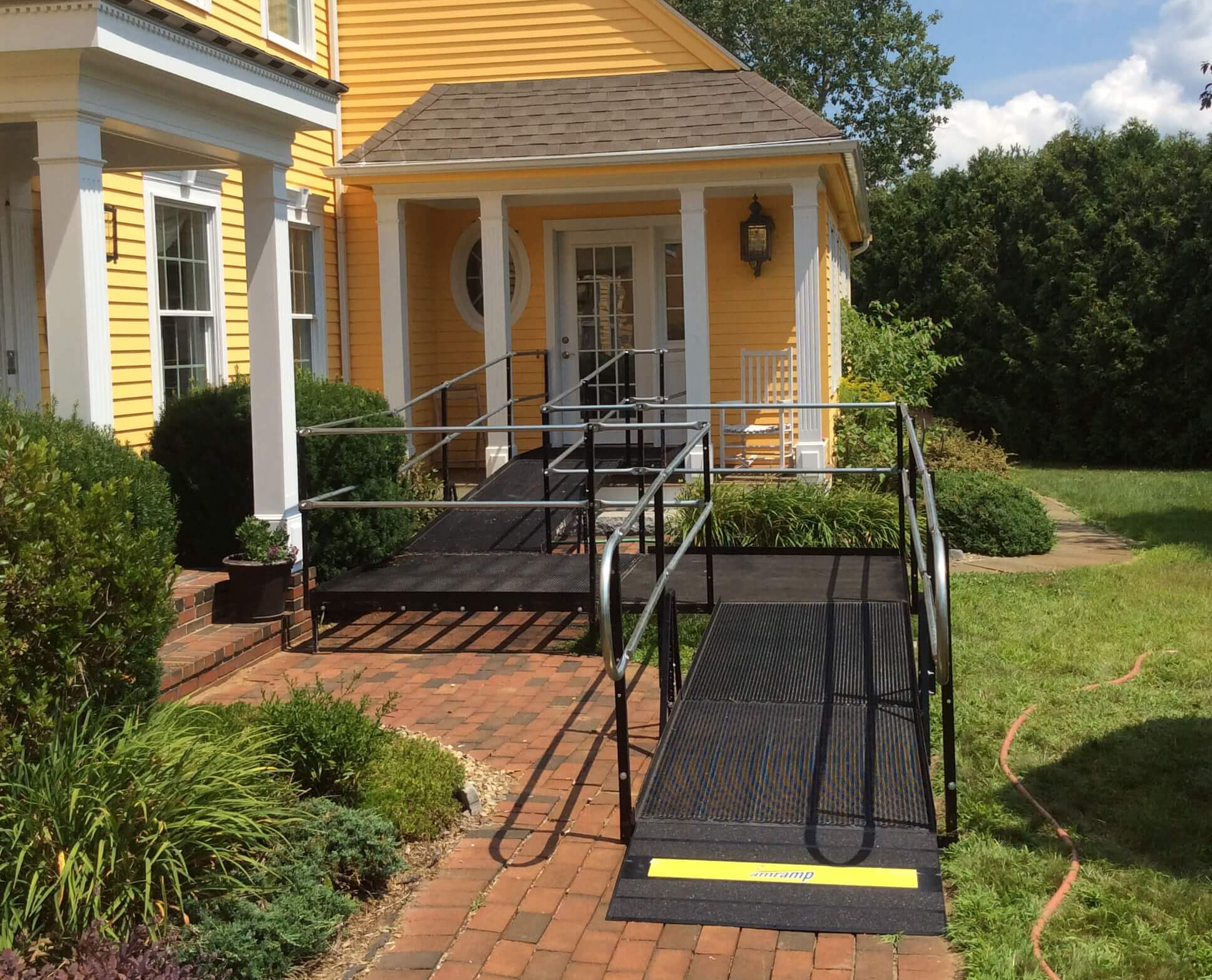
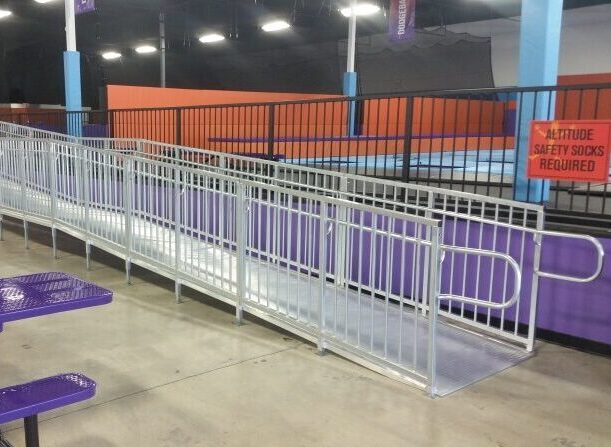
One option for commercial properties is a modular ramp system. Rather than being constructed permanently from materials such as concrete, modular ramps consist of components that can be configured for a particular site and assembled on location.
That flexibility can be useful for commercial buildings because the ramp can be designed around existing entrances, walkways, and other property features. Depending on the system and application, modular ramps may also be reconfigured or relocated if the property’s accessibility needs change.
The appropriate commercial ramp configuration will depend on factors such as the amount of vertical rise, available space, expected use, and applicable accessibility and building requirements.
When a Vertical Platform Lift May Make More Sense
A vertical platform lift may be an alternative to a commercial ramp when available space is limited or a building has a significant change in elevation.
Often referred to as a VPL, a vertical platform lift transports a person vertically between different levels while they remain on the platform. This allows individuals using wheelchairs and other compatible mobility devices to travel between elevations without transferring out of their device.
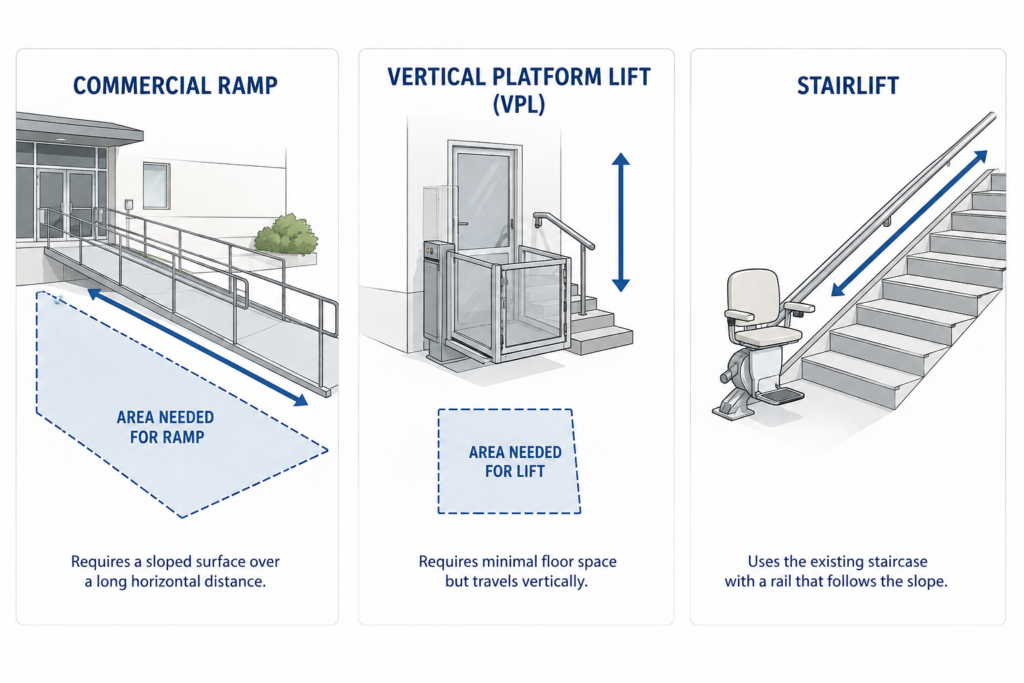
Because a VPL moves vertically instead of requiring the horizontal space needed for a ramp, it can be particularly useful at commercial properties where space is limited. It may also help preserve existing walkways, parking areas, or other usable space around an entrance.
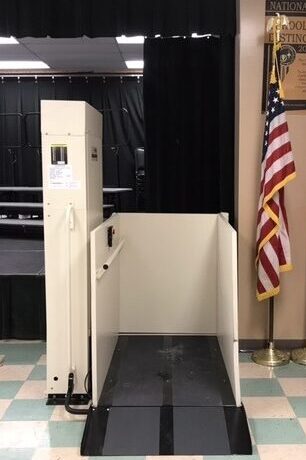
Commercial vertical platform lifts can be used in a variety of settings and may be installed indoors or outdoors depending on the equipment and application. As with a ramp, the property itself and applicable requirements should be evaluated when determining whether a VPL is appropriate.
Could a Stairlift Be an Option?
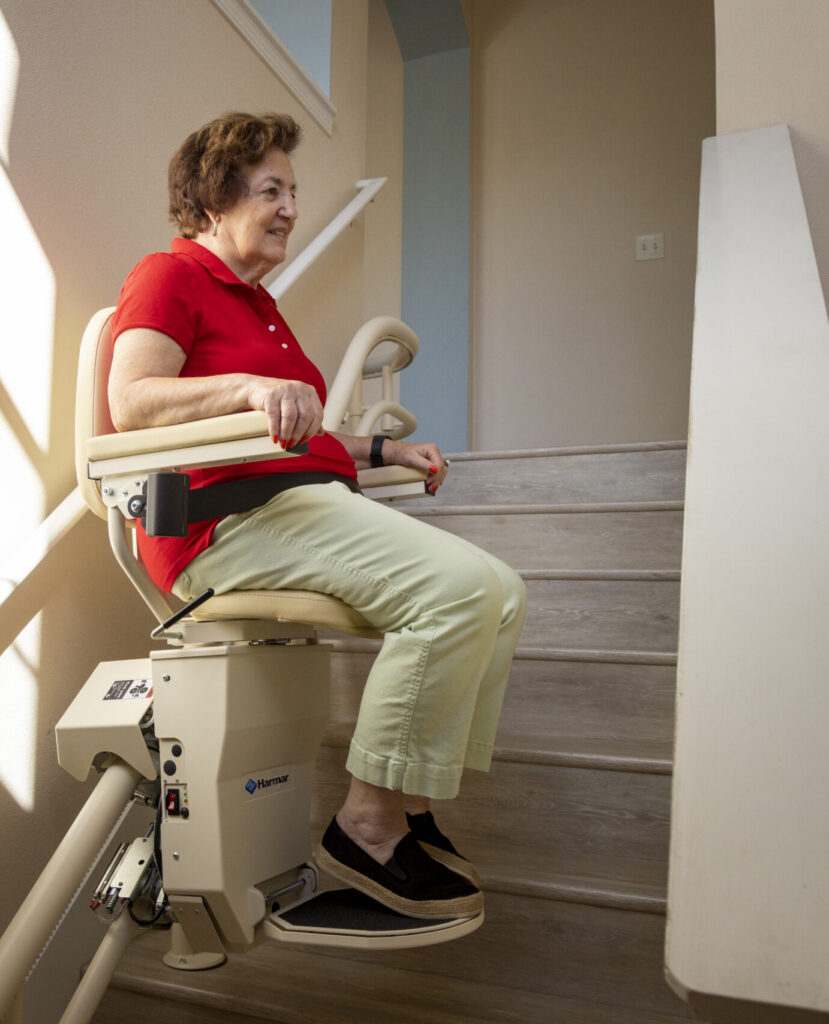
For certain commercial applications, a stairlift may provide another way to improve access between levels.
A stairlift travels along a rail installed alongside a staircase, allowing an individual to travel up or down the stairs while seated. Because the lift works with an existing staircase, it may be an option in situations where installing a ramp or vertical platform lift isn’t practical.
However, stairlifts and platform lifts serve different needs. A stairlift generally requires the individual to transfer into a seat, while a vertical platform lift can accommodate someone who remains in a wheelchair or other compatible mobility device.
When evaluating accessibility products for a commercial property, it’s important to consider who will use the equipment in addition to what will physically fit within the space.
Ramp, VPL, or Stairlift?
Choosing between a commercial ramp, vertical platform lift, and stairlift starts with understanding how each solution provides access.
A commercial ramp creates a sloped accessible route and may be a good fit when there is sufficient space to accommodate the necessary ramp configuration. A vertical platform lift moves users vertically and can be useful when space is limited or the amount of vertical rise makes a ramp less practical. A stairlift follows an existing staircase and may be an option for individuals who are able to transfer to and from the lift’s seat.
There isn’t one solution that’s right for every commercial building. The best option depends on both the physical property and the needs of the people who will use it.
Accessibility Needs Aren't Always Permanent
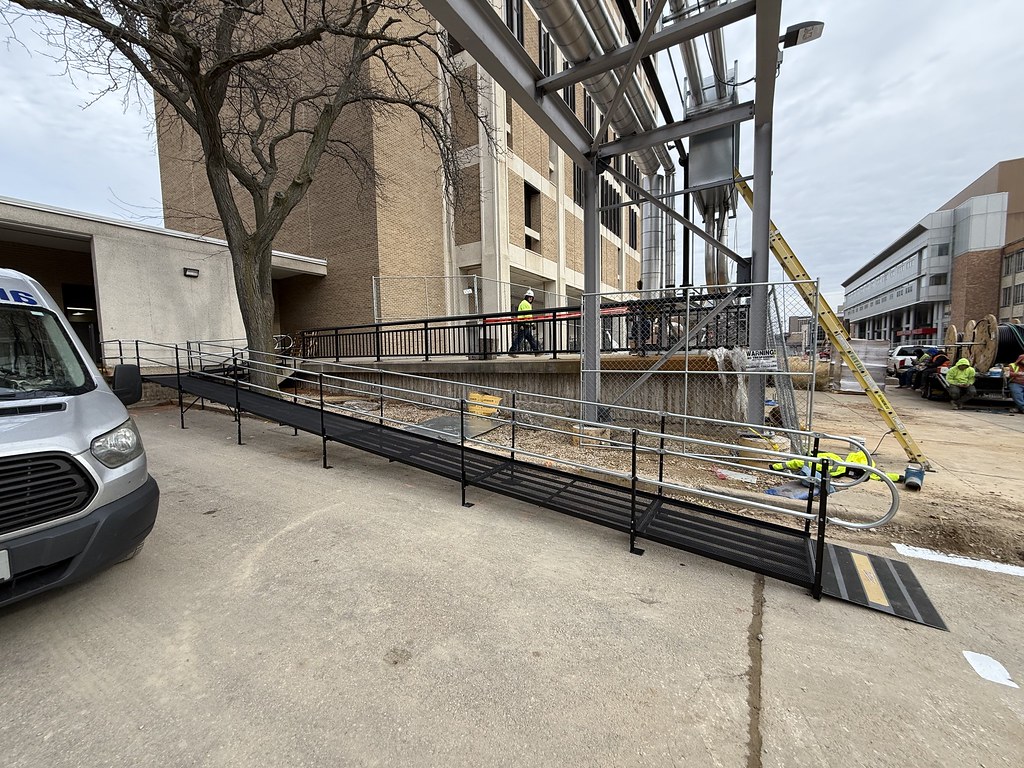
Not every commercial accessibility need requires a permanent solution.
Businesses and organizations may need temporary access during renovations, construction projects, repairs, special events, or while a longer-term accessibility project is being planned. A temporary modular ramp can provide an accessible route without requiring the same type of permanent construction as a concrete ramp.
Modular systems can also offer flexibility for longer-term applications. Commercial properties change over time: entrances are renovated, tenants change, buildings are repurposed, and accessibility needs evolve. Depending on the system and installation, a modular ramp may be reconfigured to accommodate some of those changes.
Thinking about both current and future accessibility needs can help businesses and property managers choose a solution that makes sense beyond the immediate project.
Which Accessibility Solution Is Right for Your Building?
The physical layout of a commercial building is often one of the biggest factors in determining which accessibility solution makes sense. Ramps require sufficient horizontal space, and the amount of space needed generally increases with the vertical rise. When that space isn’t available, a vertical platform lift may be worth considering because it moves vertically rather than extending across a larger area.
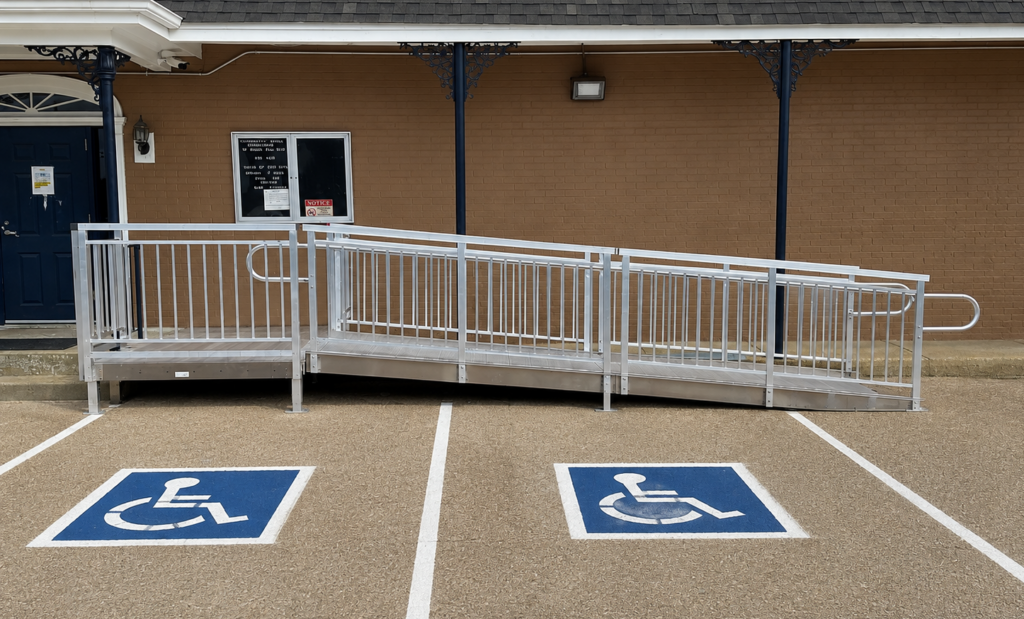
Who will use the equipment matters, too. If the accessible route needs to accommodate people who use wheelchairs or other mobility devices, a ramp or VPL may meet different needs than a stairlift, which generally requires the user to transfer to a seat. Expected traffic, indoor versus outdoor placement, and whether the need is temporary or long term can also influence the decision.
The surrounding property should also be considered. Existing stairs, sidewalks, landscaping, parking areas, doorways, and other building features can affect where accessibility equipment can be installed and how it should be configured.
Commercial accessibility projects may also be subject to the Americans with Disabilities Act (ADA), building codes, permitting requirements, and other federal, state, or local regulations. Requirements vary depending on the property and project, so an accessibility solution should be evaluated for the specific application rather than assuming the same approach will work for every building.
Planning Your Commercial Accessibility Project
Finding the right accessibility solution starts with understanding the building, the people who need access, and the challenges the project needs to solve.
For one property, that might mean installing a commercial modular ramp at an entrance. For another, limited space could make a vertical platform lift a better option. Other buildings may have accessibility needs that call for a stairlift or a combination of products.
Amramp provides commercial accessibility solutions for a wide range of properties and organizations. Our accessibility products include modular ramps, vertical platform lifts, stairlifts, and other solutions that can help make commercial spaces easier to navigate.
Rather than starting with a particular product, start with the accessibility challenge. Evaluating the property and how people need to move through it can help identify a solution that works for the space today while taking future needs into consideration.