
Key Takeaways
- Philadelphia rowhomes present unique accessibility challenges. Narrow staircases, steep steps, and multi-story layouts can make aging in place difficult.
- Stair lifts can help homeowners remain independent. They provide a practical way to move between floors without major home renovations.
- Stair lifts can accommodate many staircase layouts. Straight and curved models offer options for different configurations, including some narrow or winding staircases.
- Installation is typically minimally invasive. Stair lifts generally attach to the stair treads rather than the walls.
- A professional evaluation is the best first step. Amramp offers free evaluations to help Philadelphia-area homeowners find a stair lift that fits their home and mobility needs.
Why Philadelphia Rowhomes Can Be Challenging for Aging in Place
Many Philadelphia rowhomes were designed to maximize living space on relatively narrow lots. As a result, bedrooms and full bathrooms are often located on upper floors, while kitchens and living areas are on the main level.
For someone experiencing arthritis, balance difficulties, joint pain, or reduced strength, using the stairs multiple times a day can become increasingly difficult.
Common accessibility challenges in Philadelphia rowhomes include:
- Narrow staircases: Limited space can make it difficult to navigate stairs, especially when using a cane or other mobility aid.
- Steep stairs: Older homes may have steeper staircases than those found in newer construction.
- Multiple floors: Essential rooms may be separated by one or more flights of stairs.
- Limited renovation options: Narrow layouts can make major structural changes complicated or expensive.
- Small landings and tight turns: Some staircases include turns or intermediate landings that require a customized accessibility solution.
These challenges aren’t limited to Philadelphia’s city neighborhoods. Older multi-story homes throughout surrounding communities can present similar concerns.
For homeowners who love where they live, addressing the staircase may be an important step toward remaining independent at home.
Can a Stair Lift Fit in a Narrow Philadelphia Rowhome?
One of the most common concerns homeowners have is whether a stair lift will fit on their existing staircase.
The answer depends on the staircase’s width, shape, and available clearance, but many stair lifts are designed to accommodate spaces where extensive renovations aren’t practical.
A stair lift typically consists of a motorized chair that travels along a rail mounted to the staircase. Many models include folding seats, armrests, and footrests to reduce the amount of space occupied when the lift isn’t being used.
Unlike some other home accessibility modifications, installing a stair lift generally does not require rebuilding the staircase.
However, not every staircase is suitable for every model. Narrow stairs, doorways near the top or bottom, and limited landing space can affect which options are available.
A professional evaluation can help determine whether a stair lift is appropriate for the home’s layout and the person who will use it.
Straight vs. Curved Stair Lifts: Which Is Right for Your Home?
Straight Stair Lifts
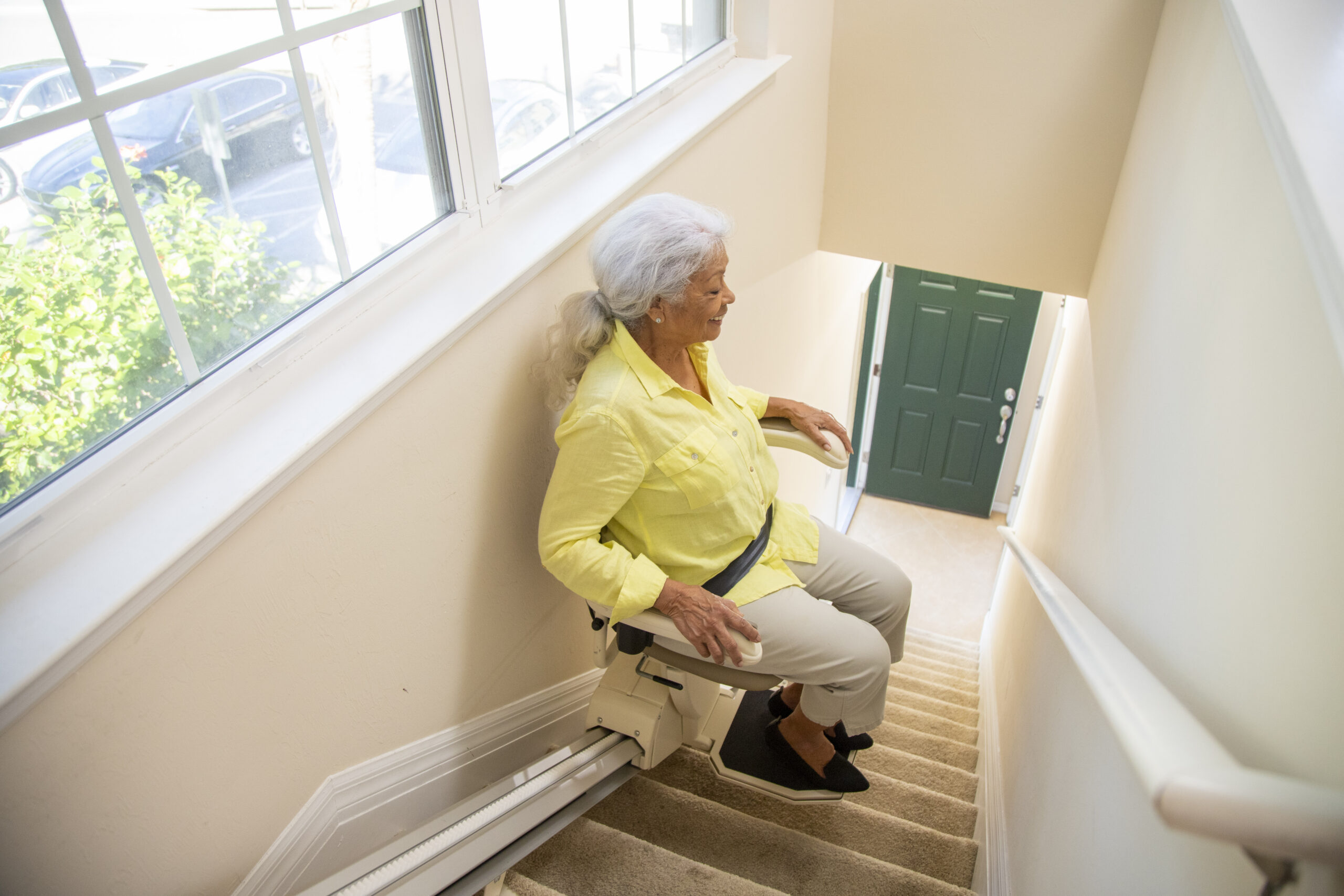
Straight stair lifts are designed for staircases that travel in a continuous straight line without turns or intermediate landings. These systems typically use a straight rail and may be a good fit for homes with an uninterrupted staircase between floors. Because they don't require a custom-curved rail, straight stair lifts are generally less expensive than curved models.
Curved Stair Lifts
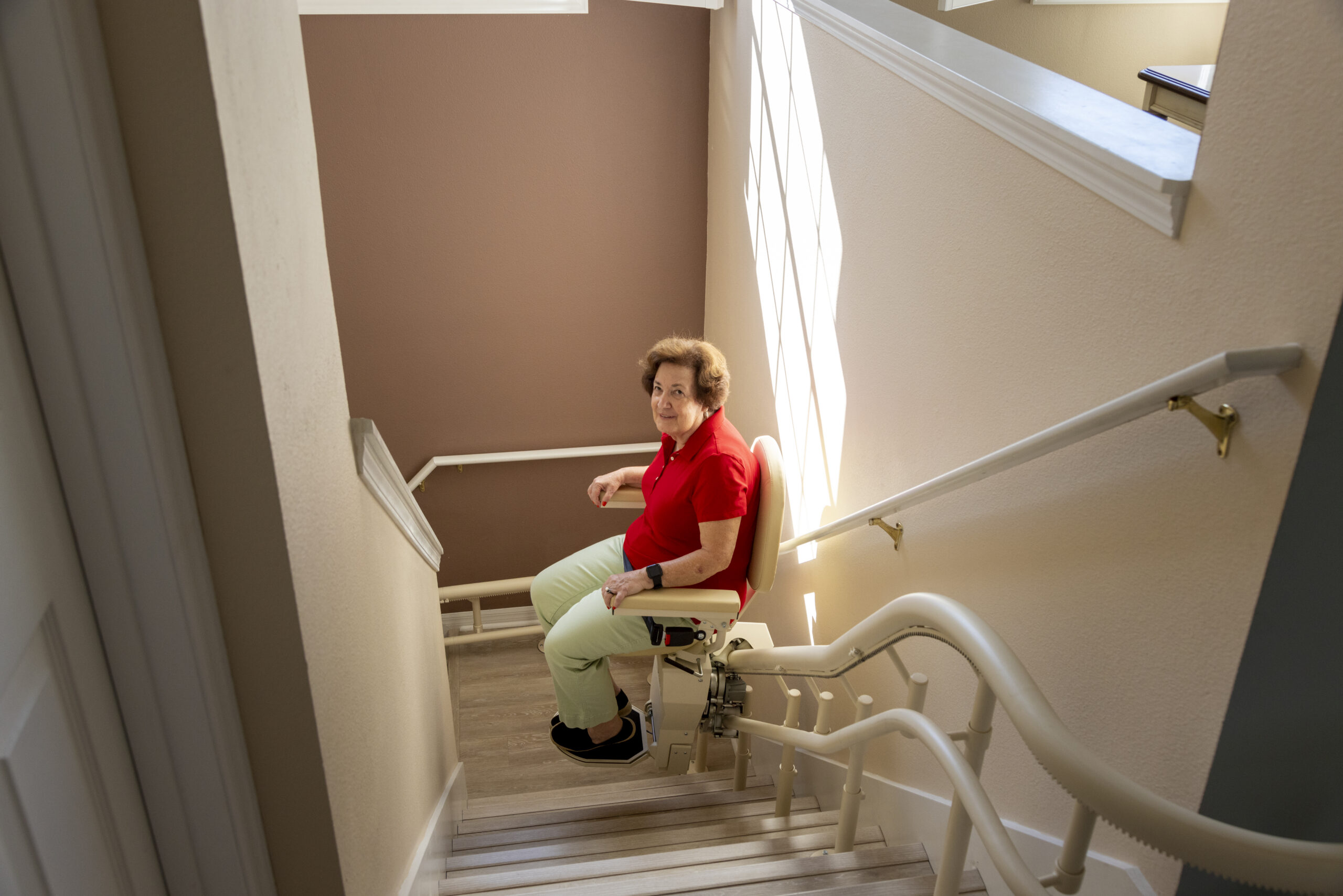
Some Philadelphia rowhomes have staircases with turns, corners, or intermediate landings that may require a curved stair lift. Curved stair lifts use rails designed to follow the specific shape of the staircase, allowing the chair to navigate changes in direction. Although curved stair lifts generally involve more customization, they can provide an accessibility solution for homes where a straight lift isn't an option.
What Does Stair Lift Installation Involve?
For many homeowners, the idea of modifying an older home can feel overwhelming. Fortunately, stair lift installation is generally less invasive than major remodeling.
The process typically begins with an evaluation of the staircase and the person who will use the lift.
During the evaluation, an accessibility professional considers factors such as:
- Staircase width and configuration
- Available space at the top and bottom of the stairs
- Doorways and other potential obstructions
- The user’s ability to sit, transfer, and operate the lift
- Electrical requirements and other installation considerations
Once an appropriate model is selected, the rail is generally attached to the stair treads rather than the wall.
Installation timelines vary depending on the model and staircase configuration. Straight stair lifts can often be installed more quickly than curved systems, which may require custom manufacturing.
For older Philadelphia homes, a professional evaluation is particularly important to ensure the proposed solution fits the existing layout.
How Much Does a Stair Lift Cost in Philadelphia?
The cost of a stair lift depends on several factors, including the type of staircase, the lift model, and any additional features required.
Straight stair lifts are generally more affordable because they use a standard rail configuration. Curved stair lifts typically cost more because their rails must be designed for the individual staircase.
Other considerations may include the length of the staircase, available landing space, and features such as powered folding components.
Rather than choosing a lift based on price alone, homeowners should consider which model best accommodates both their staircase and their mobility needs.
Amramp Accessibility offers free evaluations to help homeowners understand their options and receive pricing based on their specific situation.
Other Accessibility Improvements to Consider When Aging in Place
While stair lifts can make moving between floors easier, they’re often just one part of creating a more accessible home.
For Philadelphia homeowners planning to age in place, it’s also worth considering how safely they can enter and exit the property and navigate other areas of the home.
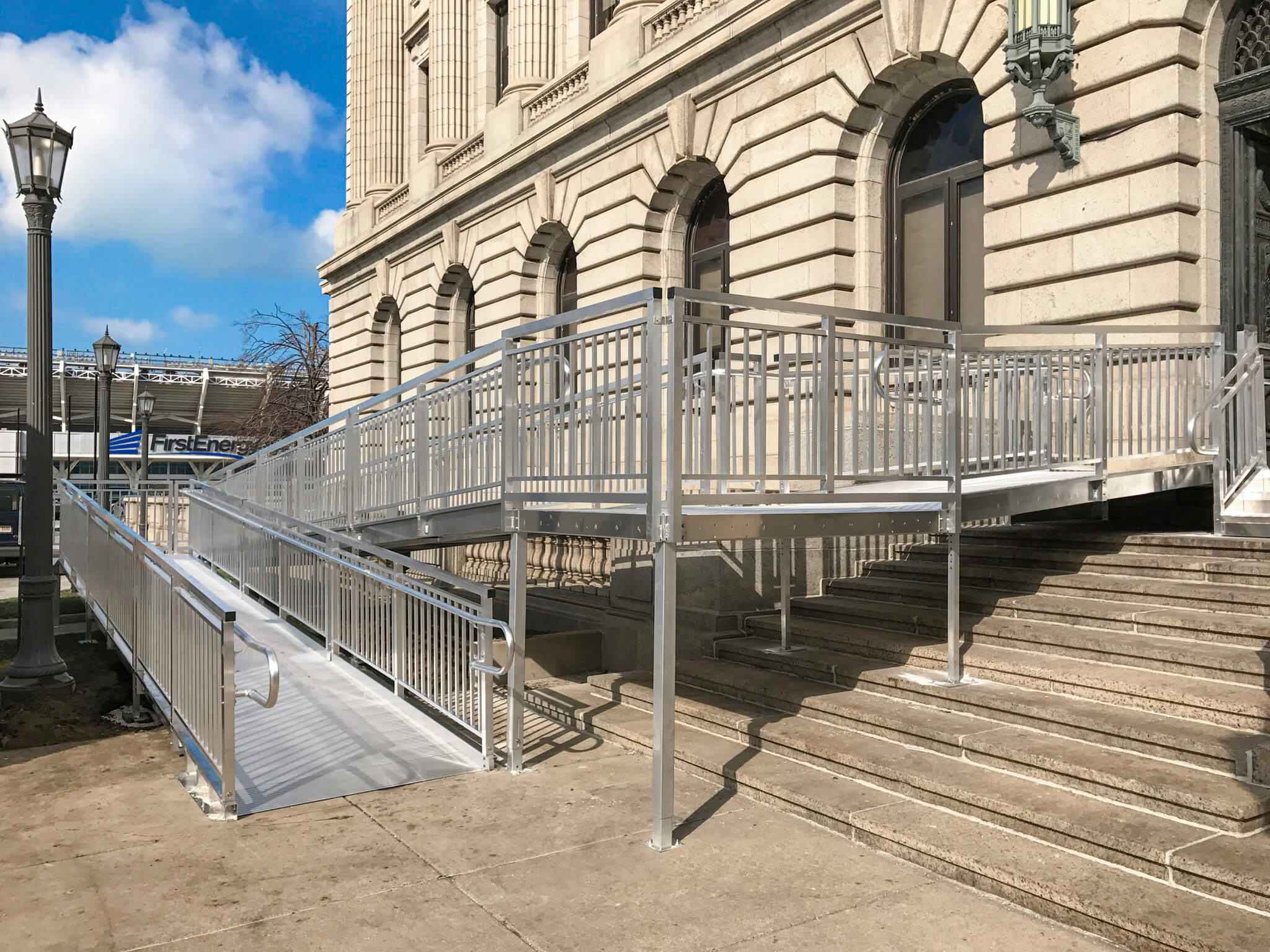
Wheelchair ramps: Raised entrances and front steps can create barriers for people who use wheelchairs or other mobility devices. Modular wheelchair ramps can provide an accessible entrance when the property has sufficient space.
Grab bars and handrails: Bathrooms, hallways, and other areas where additional support is needed may benefit from properly installed grab bars or handrails.
Threshold ramps: Small changes in elevation between rooms or at doorways can make it difficult to use mobility devices. Threshold ramps can help create smoother transitions.
Bathroom accessibility solutions: Bathing and transferring can become more challenging as mobility changes. Bathroom safety products and modifications can help address these concerns.
Considering accessibility throughout the home, rather than focusing on a single obstacle, can help homeowners plan for both current and future needs.
Frequently Asked Questions About Stair Lifts in Philadelphia
Can you install a stair lift in an old Philadelphia rowhome?
Yes, many older rowhomes can accommodate stair lifts. However, the staircase’s width, layout, and available clearance will determine which models are suitable. A professional evaluation is the best way to identify the available options.
Do stair lifts work on steep or narrow stairs?
Some stair lift models are designed for narrow or steep staircases. Suitability depends on the specific dimensions and configuration of the stairs, as well as the user’s needs.
Do stair lifts damage the walls?
Stair lift rails are generally attached to the stair treads rather than the walls. Installation does involve mounting hardware, but typically does not require major structural changes.
Can stair lifts go around corners?
Yes. Curved stair lifts are designed to follow staircases with turns, corners, or intermediate landings. Their rails are customized to the staircase’s layout.
How long does it take to install a stair lift?
Installation time varies by model and staircase configuration. Straight stair lifts can often be installed relatively quickly once the appropriate equipment is available, while curved systems generally require additional time for custom rail manufacturing.
Explore Stair Lift Options for Your Philadelphia Home
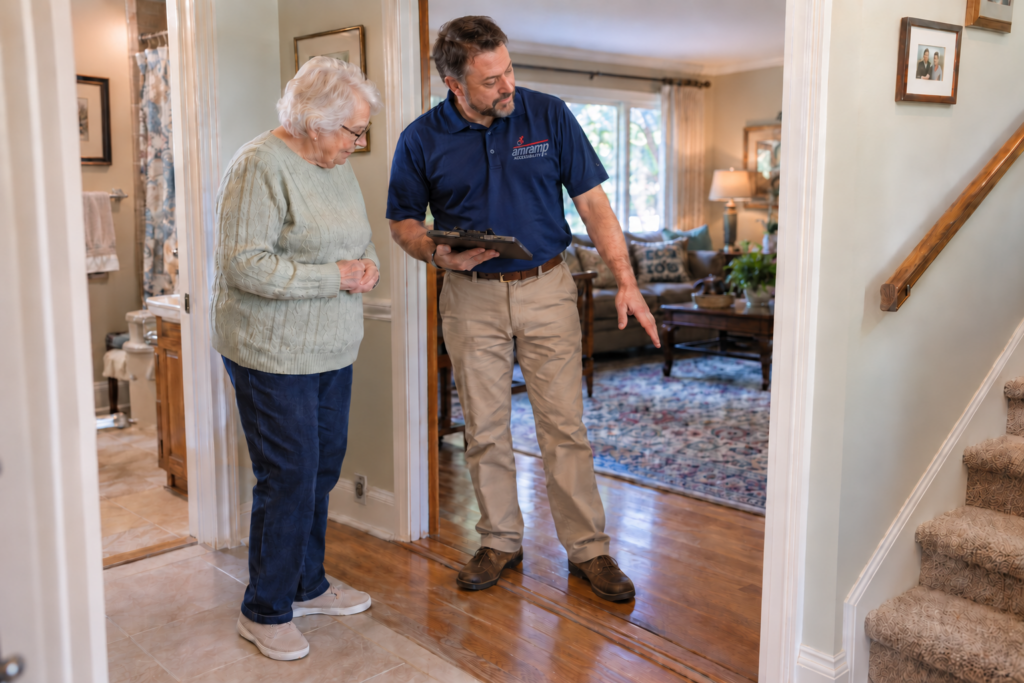
Aging in place shouldn’t necessarily mean giving up access to entire floors of your home.
For Philadelphia homeowners dealing with steep, narrow, or difficult staircases, a stair lift may provide a practical way to move between floors while continuing to enjoy the home and neighborhood they love.
Amramp Accessibility helps homeowners explore stair lifts, wheelchair ramps, and other accessibility solutions based on their individual needs and home layouts.
Wondering whether a stair lift will fit in your home?
Contact Amramp Accessibility to schedule a free evaluation and learn more about stair lift options for your Philadelphia-area home.
Helping people access the places they love.