Choosing the right wheelchair ramp is one of the most important decisions you can make to improve safety, accessibility, and independence at home. Whether you’re planning for recovery after surgery, supporting a loved one with long-term mobility needs, or preparing to age in place, selecting the right accessibility solution can make everyday life easier.
With so many options available – including portable ramps, threshold ramps, modular steel wheelchair ramps, and rental solutions – it can be difficult to know where to begin.
This blog explains the different types of wheelchair ramps, what factors to consider before making a decision, and how to determine which option is best for your home and mobility needs.
What Is the Best Wheelchair Ramp for a Home?
The best wheelchair ramp depends on several factors, including:
- The height of the entrance
- The mobility device being used
- Whether the need is temporary or permanent
- The available space around your home
- Your long-term accessibility goals
Because every home is unique, there isn’t a one-size-fits-all solution. A wheelchair ramp that works well for one family may not be the safest or most practical option for another.
That’s why professional home evaluations are so valuable: they ensure the ramp is designed specifically for your property and your needs.
What Types of Wheelchair Ramps Are Available?
Modular Ramps
Portable Ramps
Threshold Ramps
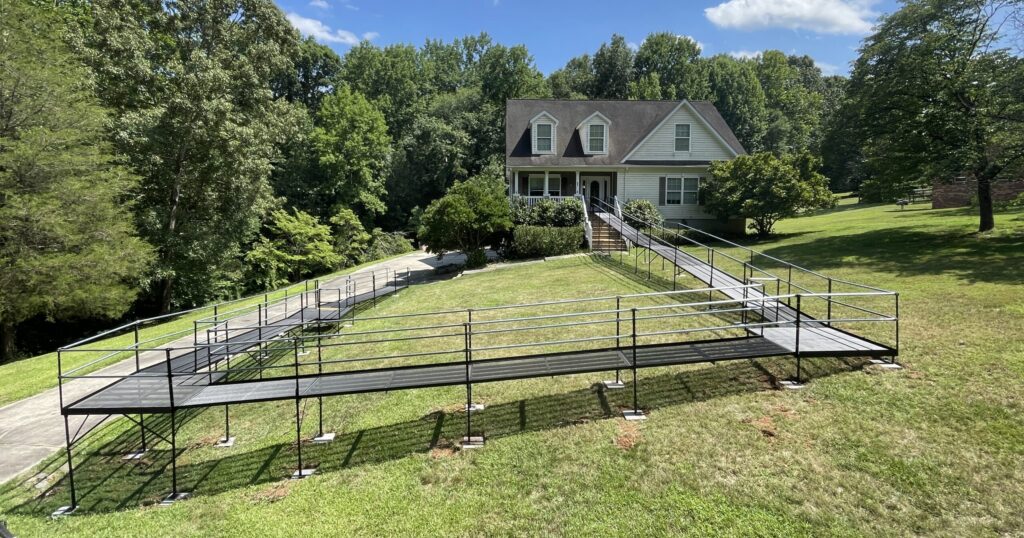
Modular Steel Wheelchair Ramps
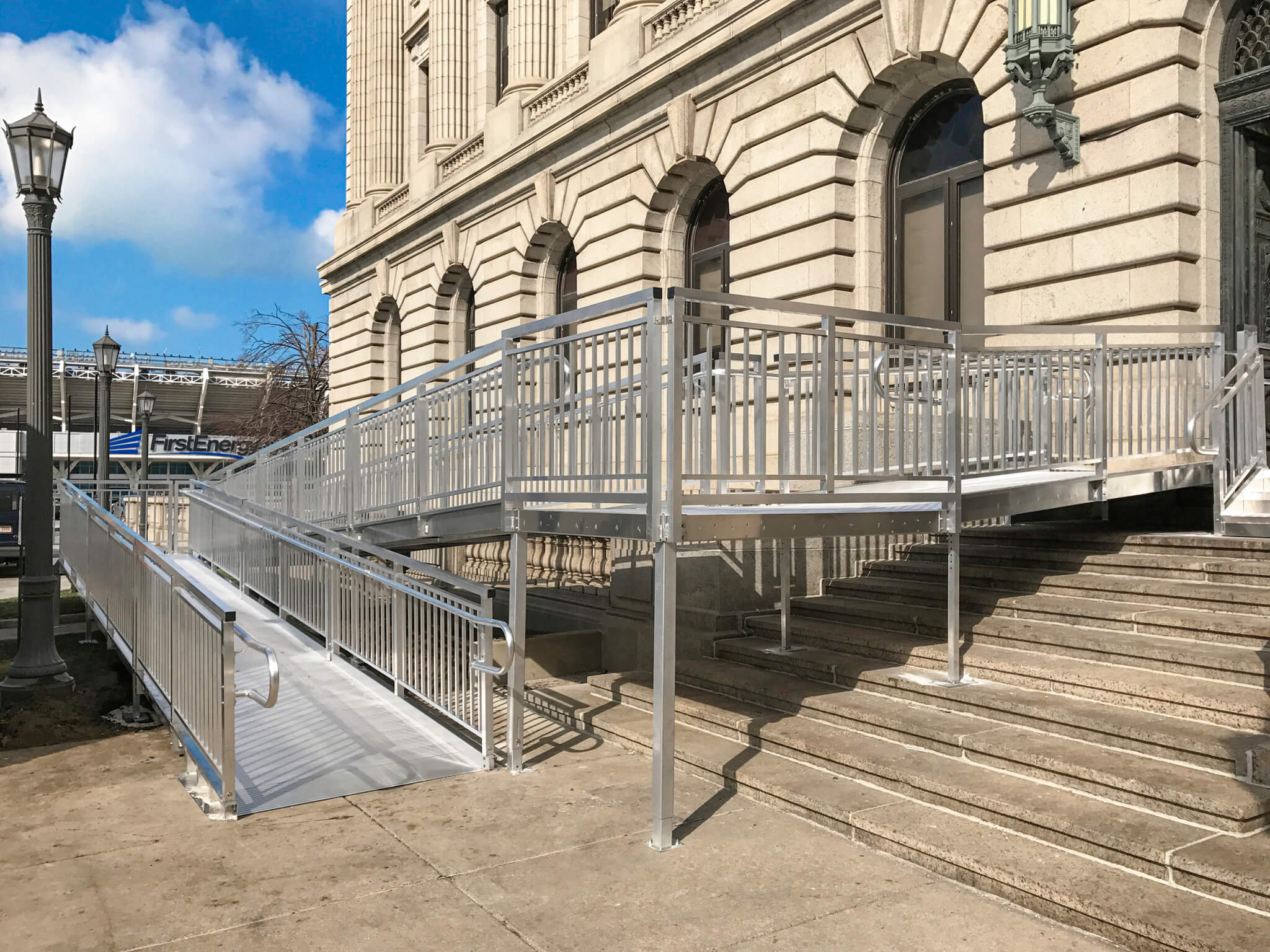
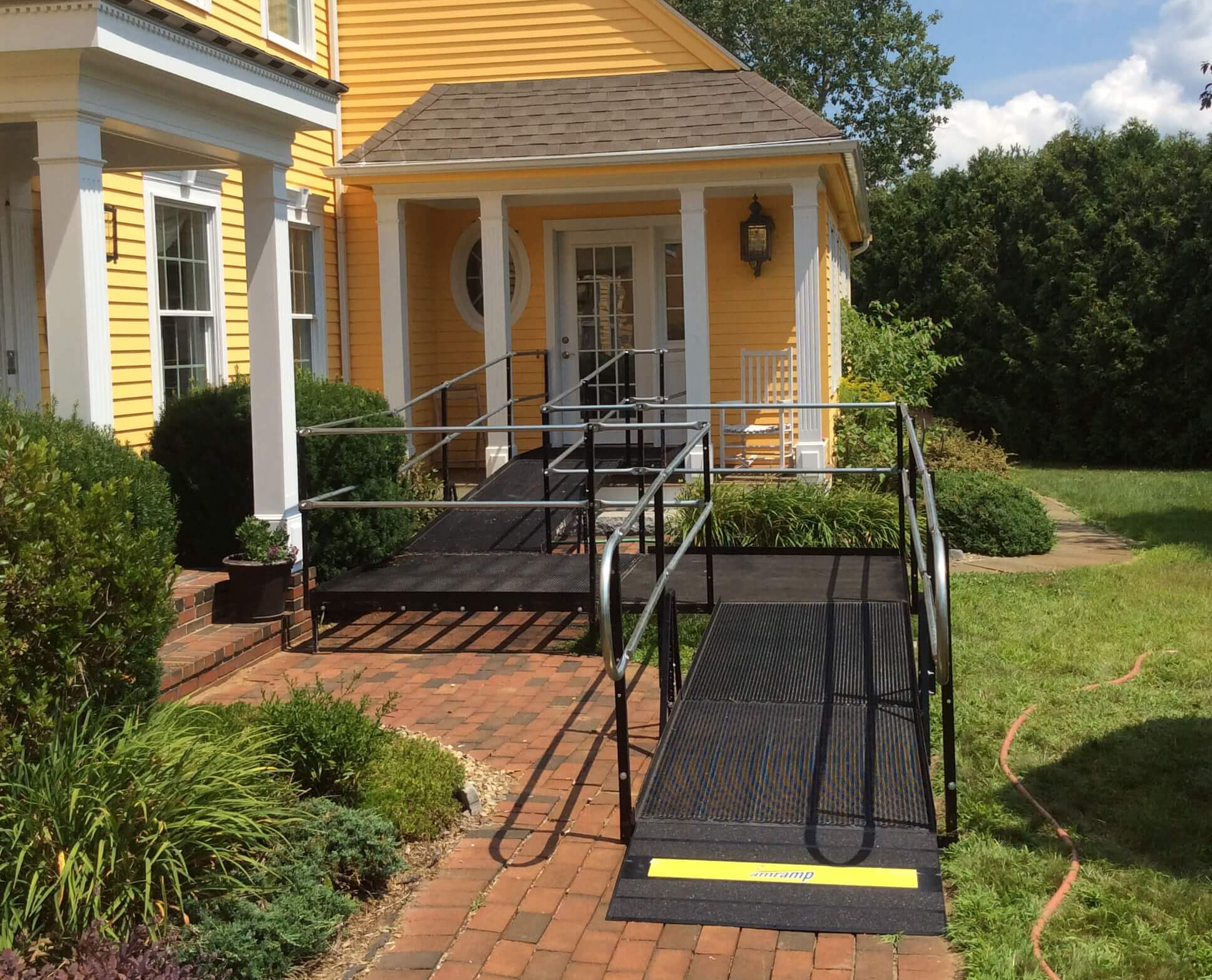
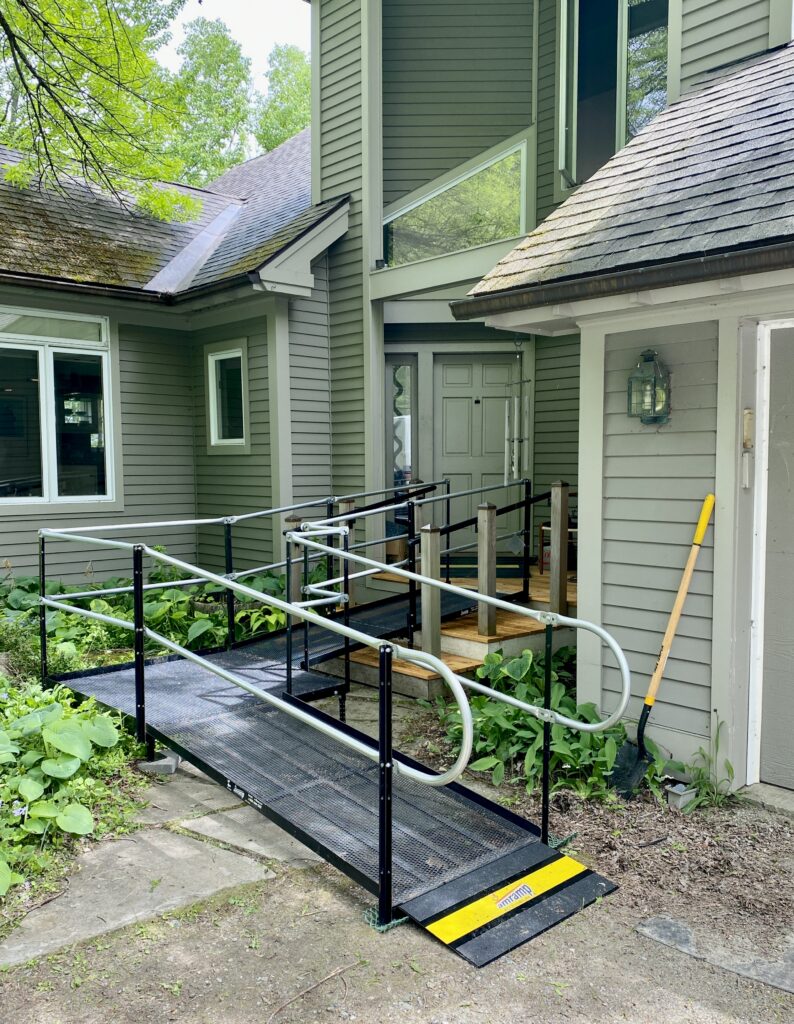
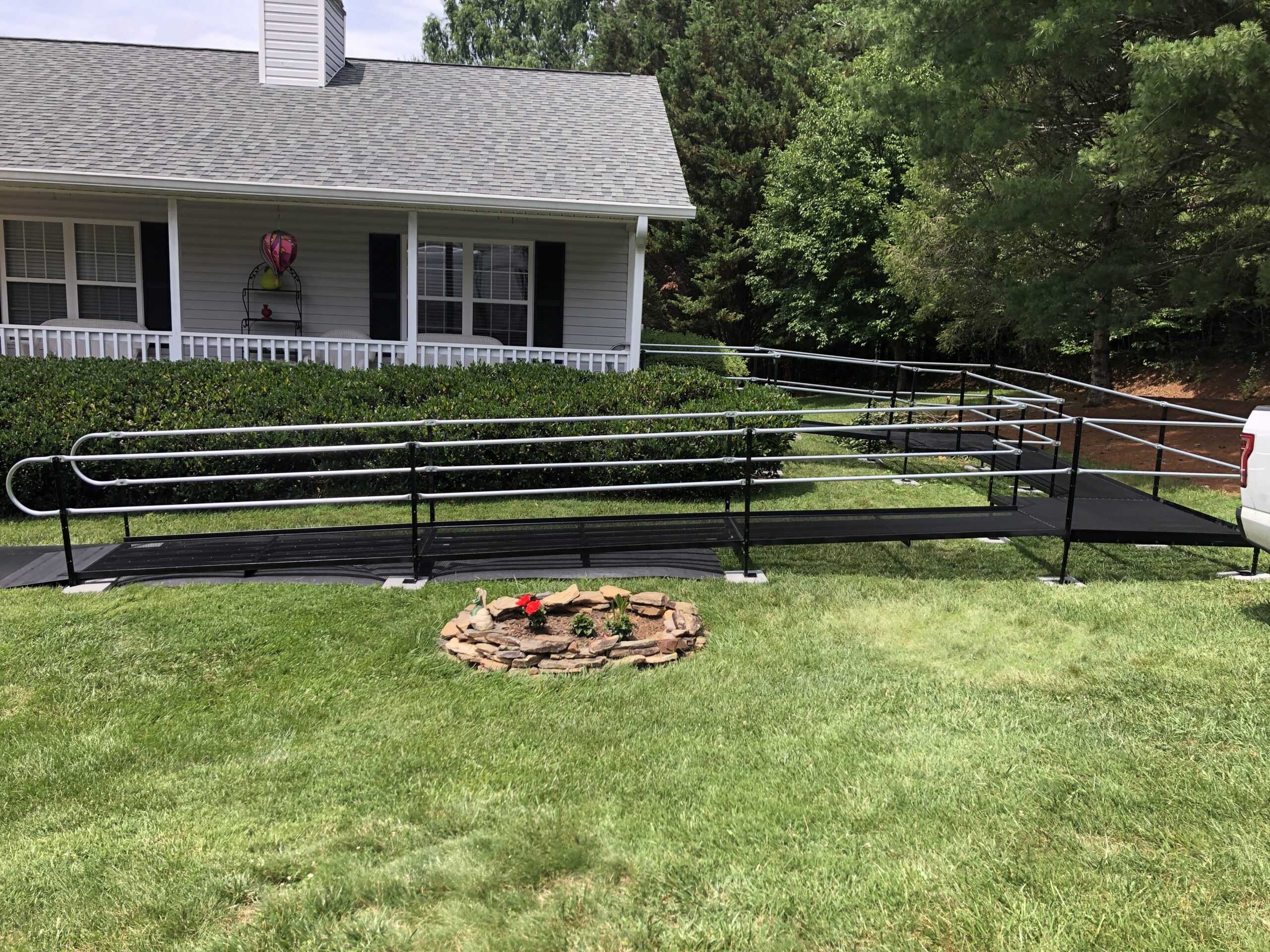
For many homeowners, modular steel wheelchair ramps offer the greatest flexibility.
These systems are custom designed for each property and can accommodate:
- Front entrances
- Back entrances
- Garages
- Porches
- Multiple landings
- Changes in elevation
Unlike wood or concrete ramps, modular ramps are assembled from galvanized steel components that can often be expanded, reconfigured, or removed if accessibility needs change.
Because they’re customized to your home, modular ramps are one of the most popular residential accessibility solutions for both temporary and long-term mobility needs.
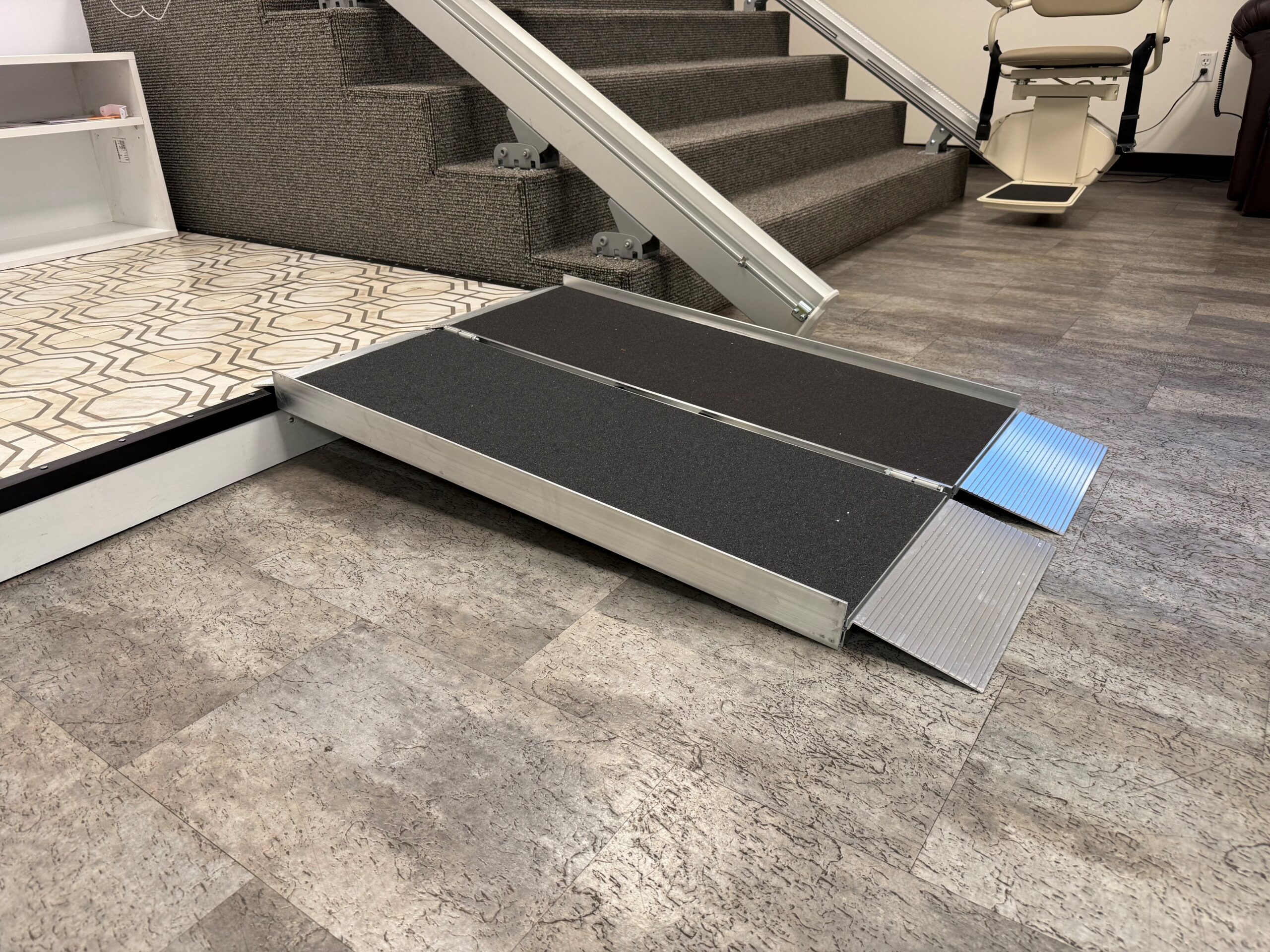
Portable Ramps
Portable ramps are lightweight and designed to be moved as needed.
They’re often ideal for:
- Small steps
- Traveling
- Temporary access
- Loading mobility devices
Portable ramps are generally best for short rises and occasional use.
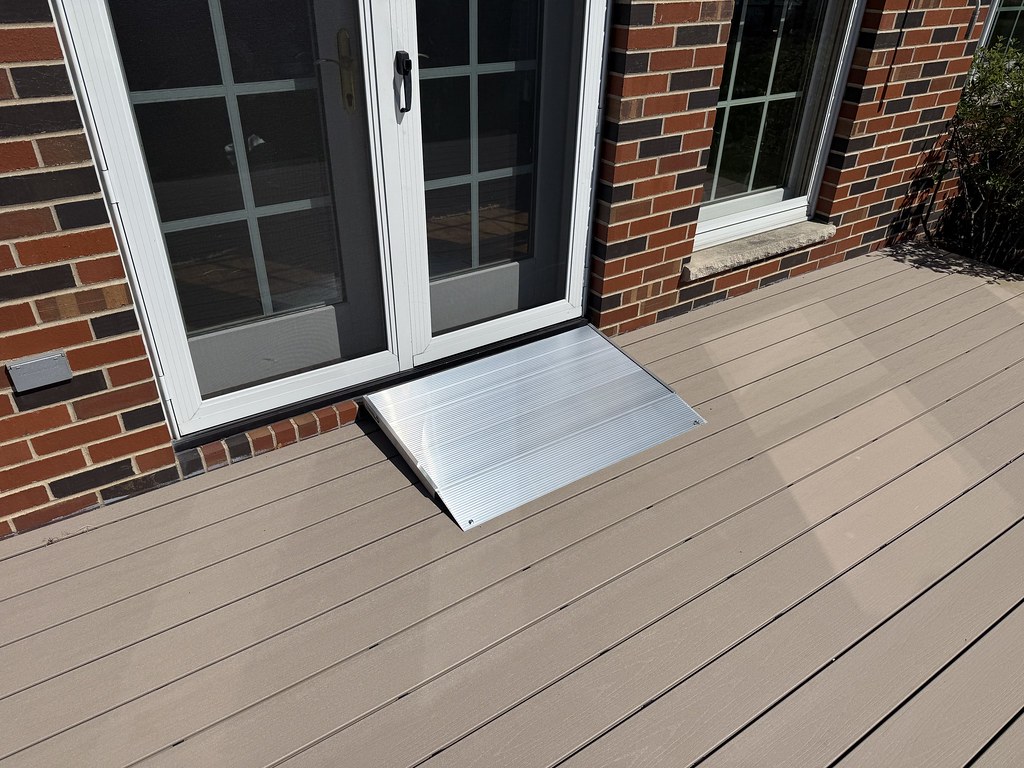
Threshold Ramps
Threshold ramps are designed to bridge small height differences at doorways.
They’re commonly used for:
- Sliding glass doors
- Front doors
- Garage entrances
- Interior room transitions
These ramps improve accessibility without requiring a large installation.
Five Questions to Ask Before Choosing a Wheelchair Ramp
1. Is Your Need Temporary or Permanent?
Someone recovering from knee replacement surgery has different accessibility needs than someone living with Parkinson’s disease or multiple sclerosis.
Understanding how long the ramp will be needed is one of the biggest factors in selecting the right solution.
2. How High Is the Entrance?
A single step requires a much different solution than a porch several feet above ground.
Professional measurements help determine:
- Ramp length
- Number of platforms
- Turning sections
- Handrail placement
This ensures the ramp is safe, comfortable, and easy to use.
3. What Mobility Device Will Be Used?
Different mobility devices have different requirements.
Consider whether the user relies on:
- Manual wheelchair
- Power wheelchair
- Walker
- Rollator
- Mobility scooter
Each device affects the ideal ramp width, slope, and turning space.
4. How Much Space Is Available?
Not every home has room for a straight ramp.
Fortunately, modular systems can often include:
- Platforms
- Switchbacks
- Turns
- Custom layouts
This flexibility allows ramps to fit many properties while maintaining safe accessibility standards.
5. Will Your Needs Change Over Time?
One of the biggest advantages of modular wheelchair ramps is adaptability.
If mobility needs increase in the future, the system can often be expanded or modified without replacing the entire ramp.
Why More Homeowners Choose Modular Steel Wheelchair Ramps
When homeowners compare accessibility solutions, modular steel ramps consistently stand out for their versatility.
Benefits include:
- Custom-designed for your home
- Professional installation
- Durable galvanized steel construction
- Low maintenance
- Rental and purchase options
- Expandable configurations
- Suitable for temporary or permanent needs
Because every installation is customized, homeowners receive a solution designed around both their property and their mobility goals.
What About Wheelchair Ramp Installation?

Why More Homeowners Choose Modular Steel Wheelchair Ramps
When homeowners compare accessibility solutions, modular steel ramps consistently stand out for their versatility.
Benefits include:
- Custom-designed for your home
- Professional installation
- Durable galvanized steel construction
- Low maintenance
- Rental and purchase options
- Expandable configurations
- Suitable for temporary or permanent needs
Because every installation is customized, homeowners receive a solution designed around both their property and their mobility goals.
What About Wheelchair Ramp Installation?
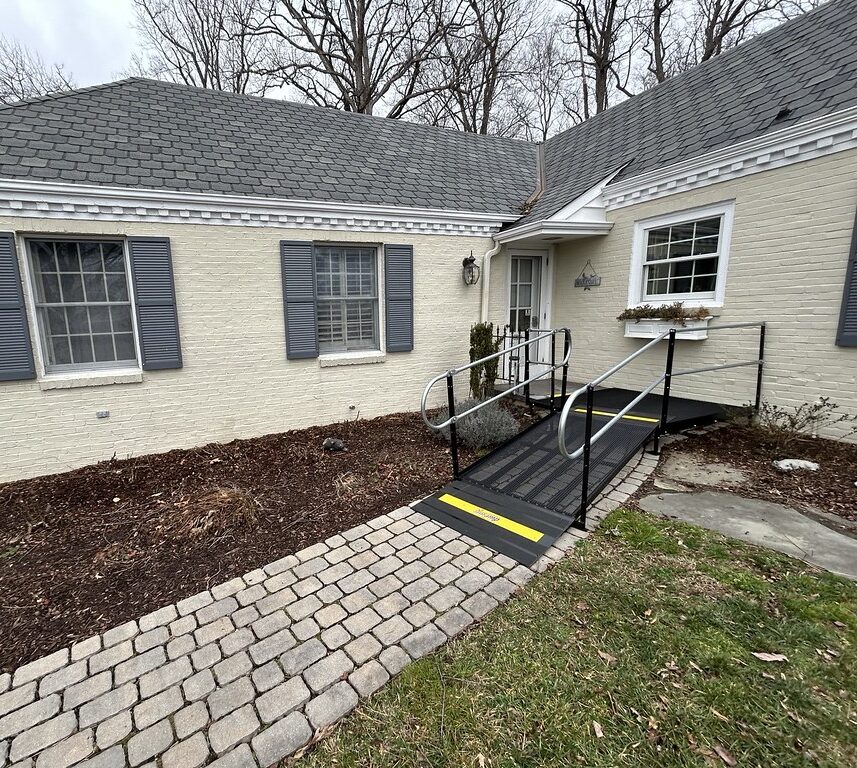
Professional installation helps ensure your ramp is safe, stable, and properly configured.
A typical installation process includes:
- Free home evaluation
- Property measurements
- Custom ramp design
- Professional installation
- Safety inspection and walkthrough
Working with an experienced accessibility provider helps ensure your ramp is designed for long-term safety and usability.
Frequently Asked Questions
What is the best wheelchair ramp for residential homes?
The best wheelchair ramp depends on your home’s layout, the height of the entrance, the mobility device being used, and whether your needs are temporary or permanent. Many homeowners choose modular steel wheelchair ramps because they can be customized for nearly any property. You can learn more about how we measure for our steel modular ramp systems here.
How long does wheelchair ramp installation take?
Installation time varies depending on the size and complexity of the project. Modular systems can often be installed more quickly than traditional built-in ramps because they use prefabricated components.
Can I rent a wheelchair ramp?
Yes. Wheelchair ramp rentals are available for many temporary situations, including recovery after surgery or injury.
Are steel wheelchair ramps slippery?
Quality modular steel ramps are designed with slip-resistant walking surfaces to help improve traction in a variety of weather conditions.
Can a modular wheelchair ramp be removed?
Yes. One advantage of modular systems is that they can often be removed or reconfigured if accessibility needs change.
Do I need a permit for a wheelchair ramp?
Our steel modular ramp systems do not require digging or building modifications and therefore do not require a building permit in most municipalities.
Why Choose Amramp?
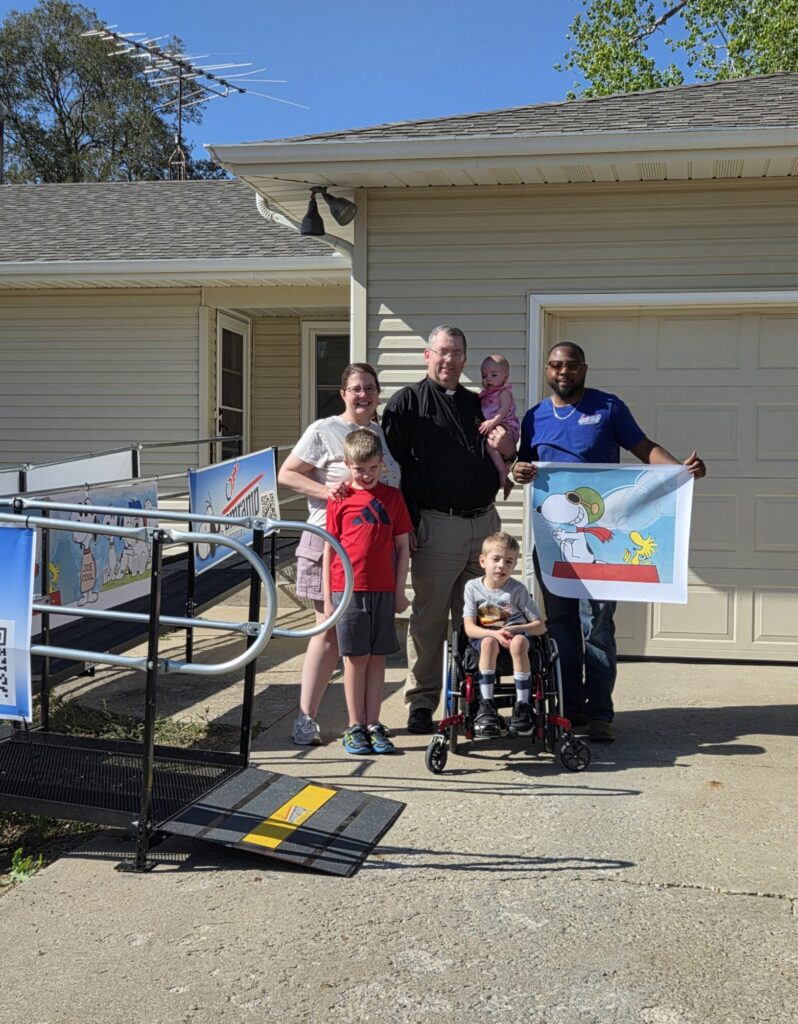
For more than 25 years, Amramp has helped families across the United States and Canada improve accessibility through professionally designed mobility solutions.
Our team understands that every home – and every person’s mobility need – are different.
That’s why every project begins with a free home evaluation to determine the safest, most effective accessibility solution for your unique situation.
Whether you need a temporary wheelchair ramp rental, a custom modular steel wheelchair ramp, stair lifts, grab bars, or other accessibility products, we’re committed to helping you stay safe and independent at home.
Take the Next Step Toward Safe Home Accessibility
Choosing the right wheelchair ramp doesn’t have to be overwhelming.
A professional evaluation can help you understand your options, answer your questions, and recommend the best solution for your home—whether your needs are temporary or long-term.
Explore our Modular Steel Wheelchair Ramps
Find your local Amramp location to schedule a free home evaluation